Key Takeaway:
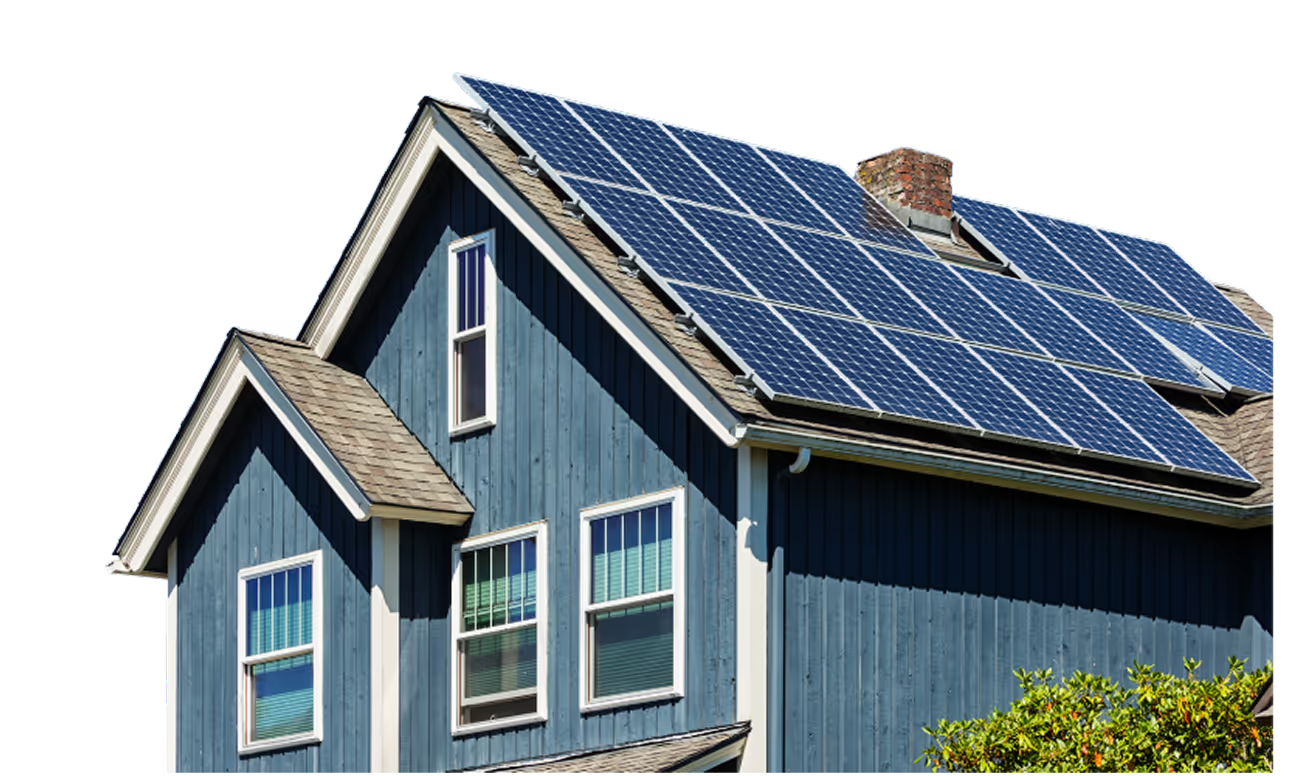
A fully installed solar system in Malaysia costs RM12,000–RM60,000+ depending on system size. Most landed homes budget RM18,000–RM35,000 for a 4–8 kWp setup. Top panel brands, such as LONGi, Jinko, Trina, JA Solar, differ in efficiency and price tier, but all carry 25-year product warranties. GetSolar's RTO plan brings the upfront cost to RM0.
If you were to look up solar prices in Malaysia, you'll likely get varying prices across the board, sometimes separated by RM10,000 or more for the same house. This isn't a scam, but it does reflect the differences in brand tier, inverter quality, roof complexity, and whether maintenance is included.
In this guide, you'll find a transparent price breakdown by system size, a brand-by-brand comparison of the panels and inverters most commonly installed in Malaysia, and a clear explanation of what determines quote variations.
With TNB rates above 1,500 kWh now at 44.43 sen/kWh following the July 2025 tariff restructure, the financial case for solar has never been clearer. Here's exactly what you can expect to pay, and what you get for it.
Solar System Price by Size: What Malaysian Homes Actually Pay
The simplest way to frame solar cost in Malaysia: RM3,000 to RM4,000 per kWp, fully installed. That benchmark, cited consistently by major installers, covers panels, inverter, mounting, SEDA-certified installation, NEM/Solar ATAP application, and monitoring setup.
Here's how that translates by house type:
For most Malaysian homeowners with a TNB bill between RM200 and RM400 per month, a 5–8 kWp system is the practical sweet spot.
Solar Panel Brand Comparison: LONGi vs Jinko vs Trina vs JA Solar
All four solar panel brands dominate Malaysia's residential market and hold Tier-1 BloombergNEF classification. This certifies them as financially stable and widely supported for warranty claims.
In terms of installed cost per watt in Malaysia, monocrystalline panels (LONGi, Jinko, Trina, JA Solar) typically run RM1.80–RM2.50/watt for the panel alone. Polycrystalline options run cheaper at RM1.40–RM1.90/watt but require more roof space for equivalent output and are increasingly phased out in favour of monocrystalline.
All four brands carry 25-year product warranties and 25–30 year performance guarantees on newer modules. For most Malaysian roofs, any of these four brands delivers strong performance for the long haul. That said, your installer's track record and after-sales support matters as much as the brand itself.
Inverter Brands and Costs
The inverter converts DC electricity from your panels into the AC electricity your home uses. It's the component most likely to need replacement during your system's lifespan (typically at year 10–15), so brand selection matters.
String inverters remain the standard choice for most Malaysian roofs. Microinverters like Hoymiles cost more upfront but deliver better performance on roofs with partial shading or multiple orientations.
What Differentiates Price Between Installers
Brand Tier
A Huawei inverter costs more than a no-name unit. LONGi panels cost more than a lesser-known brand. These differences will show up directly in the quote.
Roof Complexity
A flat roof is the cheapest to install on. A steep hip roof with multiple sections, or one requiring scaffolding, adds around RM1,500–RM3,000 to the installation cost.
What's Included
Some quotes bundle SEDA installation certification, Solar ATAP application processing, monitoring setup, and a few years of maintenance. Others price these separately. Always ask for an itemised breakdown.
Installer Quality
A SEDA GCPV-certified installer commands a premium but reduces commissioning risk and warranty complications. Uncertified installers may price 15–20% lower, but there is real risk involved if anything goes wrong during the installation.
How Solar ATAP Improve Your ROI
Malaysia's Net Energy Metering (NEM) scheme closed in June 2025 and was replaced with Solar ATAP (Solar Accelerated Transition Action Programme), launched 1 January 2026. Unlike NEM, ATAP has no national quota limit and any eligible TNB residential account holder can apply.
Under Solar ATAP, excess solar energy your home exports to the grid earns credits at System Marginal Price (SMP), a variable rate that fluctuates with grid demand. For homeowners with higher consumption and good roof orientations, ATAP can shorten the payback period by a year or more.
For a full breakdown of how the scheme works and what's changed, read our Solar ATAP guide.
Financing: Outright vs Loan vs Rent-to-Own
Upfront cost is the biggest barrier to entry to going solar in Malaysia. There are three main ways to structure the purchase:
Outright purchase: Highest long-term return, fastest payback. Best for homeowners with capital to deploy.
Solar loan / instalment plan: The Green Technology Financing Scheme (GTFS) offers subsidised interest rates through participating banks, with RM1 billion in funding extended through 2026. Monthly repayments typically run RM300–RM600 depending on system size and loan tenure.
Rent-to-Own (RTO): GetSolar's RTO plan requires RM0 upfront. You pay a fixed monthly fee (typically lower than your current TNB bill savings) and own the system fully at the end of 5 or 10 years. Installation, monitoring, maintenance, and warranty coverage are all included throughout. For homeowners who want solar without locking up capital or managing technical risk, RTO is the most accessible entry point.
For a full comparison of financing options, read our Solar Financing Options for Malaysia.
What To Expect When Going Solar
Most landed homeowners with a TNB bill above RM200 a month will find that a well-sized system pays back within 5–10 years. Over the system's 25-year lifespan, total savings typically range from RM70,000 for a smaller 4-5 kWp setup to RM120,000 or more for larger systems on higher-consumption homes.
The brand you choose matters, but it matters less than the quality of your installer, the components bundled into your quote, and whether the system is correctly sized for your actual consumption.
Ready to see your numbers? Use our Solar Calculator for a personalised estimate in under a minute or WhatsApp our team directly to get a quote.

Rent-to-Own Solar. RM0 Upfront cost. Guaranteed Savings
Immediate ROI


Rent-to-Own Solar. RM0 Upfront cost. Guaranteed Savings
(10-Year RTO plan)
+ 10-Year Free Maintenance

Be part of The Solar Collective, where we share the latest updates, tips, and discussions on solar energy.