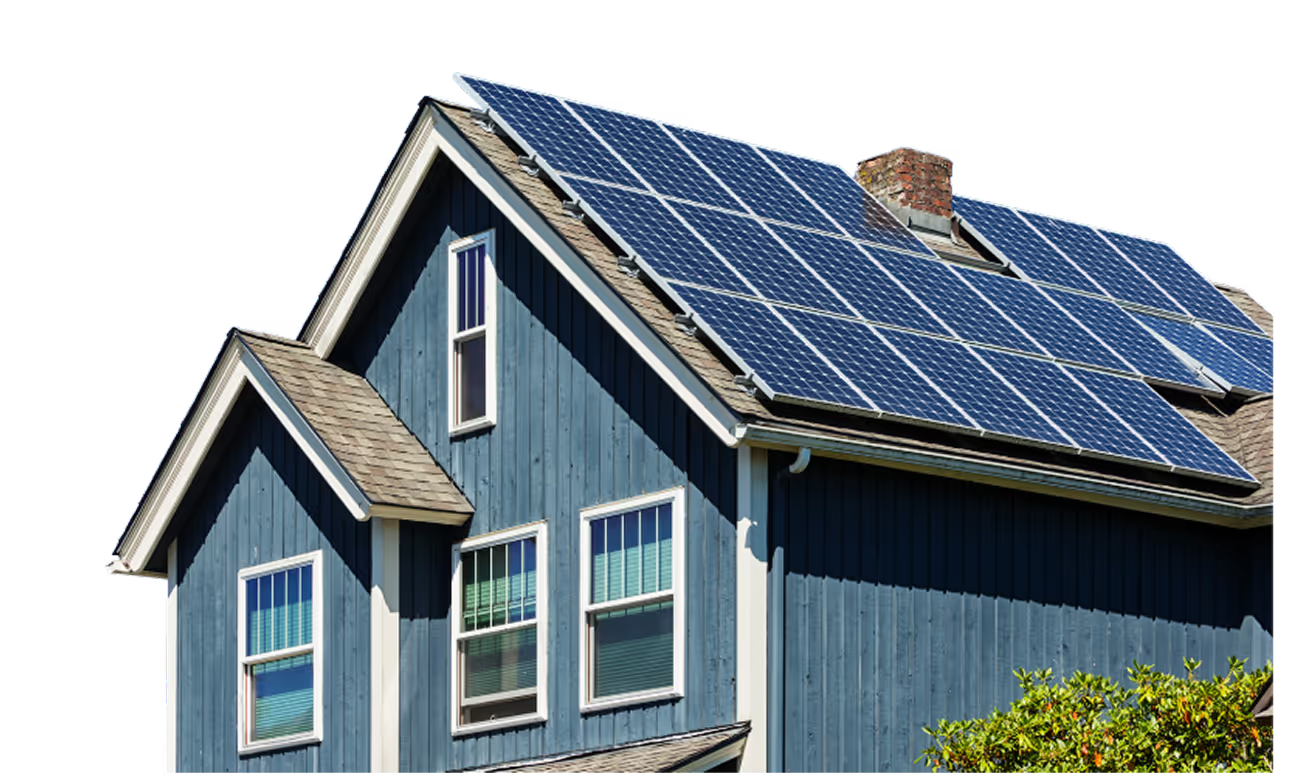

Key Takeaways:
Most solar quotes in Malaysia get revised upward not because of panel pricing, but because of something on the roof — its age, its pitch, its shading, or how much usable area it actually has. This guide walks you through the six things to check yourself before you contact an installer, so the first quote is the final quote.
The installer came out, measured your roof, and came back with a revised quote — RM3,000 higher than the number you'd been planning around. The panels hadn't changed.The financing hadn't changed. It was the roof: a few cracked tiles that needed replacing before anything could go up.
That's the most common reason solar quotes get revised upward in Malaysia. Not the panels. Not the inverter. The roof.
Before you book an installer, there are six things worth checking yourself. They take about ten minutes, need nothing more than your phone, and require no specialist equipment. Getting these right means the first quote you receive is the number you actually pay.
1. What Is The Age and Condition of Your Roof?
Solar panels can last 25 years but if your roof has fewer than 10 years of useful life left, you'll need to take everything down to redo the roof and then reinstall the panels. That's an expensive job, so it’s worth checking first.
Look for: cracked tiles, sagging beams, water stains on the ceiling directly under the roof, and any patches of moss or growth. A roof that's already leaking will continue leaking under the panels, and getting to that leak afterwards is costly and difficult.
- Under 10 years old: Almost always fine.
- 10–20 years old: Usually fine, but ask the installer to inspect tile condition during the site survey. Replace any visibly damaged tiles before installation.
- Over 20 years old, or with active leaks: Repair or replace the roof first. Doing it now means you only handle the panels once.
2. What Is Your Roof Made Of?
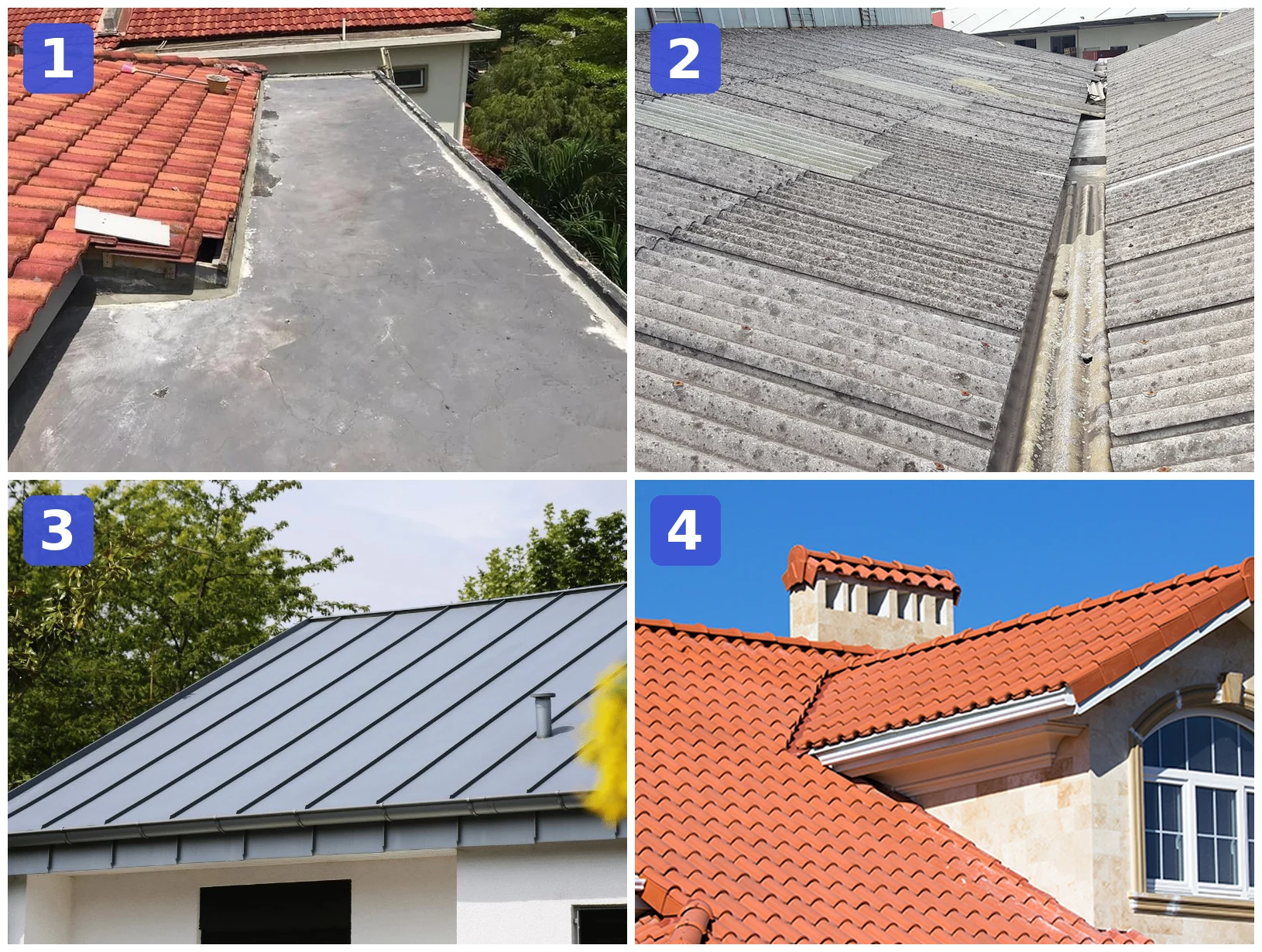
The four common roof materials in Malaysian landed homes are concrete tiles, clay tiles, metal sheet, and asbestos cement. All four can accommodate solar panels, but the installation cost and process varies.
- Concrete or clay tiles: The most common in Malaysia. Standard mounting, standard cost.
- Metal sheet roofs: Often slightly cheaper to install on, clamps attach directly without drilling through tiles. Common on newer link houses and semi-Ds.
- Asbestos cement roofs: Found on older homes built before the 2000s. Installable, but asbestos is fragile and walking on it without precautions is unsafe. Most installers will either decline or quote a higher price to cover safe handling. It usually looks like a corrugated grey sheet and is more brittle than modern metal.
- Flat concrete roofs: Rare for Malaysian landed homes, more common on commercial buildings. These need a tilted mounting frame, which adds to cost.
3. Which Direction Does Your Roof Face?
Malaysia sits close to the equator, so the rules are simpler than in temperate countries. The sun tracks from east to west, slightly south for most of the year. South-facing roofs will produce the most. East and west still perform well. North-facing roofs produce noticeably less.
In practice, most landed homes have multiple roof slopes facing different directions. The installer will design around your best-facing slopes first, then add panels on secondary slopes if more capacity is needed.
You can check your roof's orientation in under a minute on Google Maps — open satellite view, find your house, and use the compass.
4. Is Anything Shading Your Roof?
Shade is one of the biggest bottlenecks for solar output. A single mature tree casting an afternoon shadow on your panels can cut total system production by 20% or more, because most string inverters drop output across the whole string when one panel is shaded.
Walk around your house at different times of day and note where shadows fall on your roof. Pay particular attention to:
- Tall trees on your land or your neighbour's
- Adjacent double-storey or three-storey houses to the east, south, or west
- Water tanks, satellite dishes, and vent pipes on the roof itself
- Any planned construction nearby that could grow taller in the next 25 years
Light shade from a single small tree is usually manageable. Heavy shade across half the roof for several hours a day is where it becomes a real issue. If you have significant shading, the installer can use power optimisers or microinverters, which allow each panel to operate independently so one shaded panel doesn't drag down the rest, but this adds to your cost.
For more on how inverter choice handles shading, see our solar inverter guide.
5. How Much Unbroken Roof Area Do You Actually Have?
A 5 kWp system (kilowatt-peak, the measure of a solar system's rated output) needs roughly 25 m² of clean roof. A 10 kWp system needs around 50 m².
Look for: skylights, chimneys, ventilation pipes, water tanks, antenna mounts, and anything that breaks up the roof into smaller usable patches. Each break reduces the rectangular area panels can span. A 60 m² roof with a water tank in the middle might only fit 8 kWp instead of 12 kWp.
Step outside and look at your roof from the road. Focus on the largest unbroken rectangle on each slope. The rectangle is your realistic ceiling for system size.
For a sense of how this translates into cost across different home sizes, our solar panel cost guide for Malaysia has the per-kWp breakdown.
6. Can Your Roof Structurally Handle the Load?
Solar panels weigh around 12–15 kg each, plus mounting hardware. Spread across a 20-panel system, that's roughly 300–400 kg distributed across the roof. That’s well within what a properly built landed home can handle.
The edge cases to be aware of:
- Older homes with timber rafters: Some pre-1980s builds used lighter timber framing. The installer will check beam condition during the site survey.
- Renovated roofs: If your roof was raised, extended, or partially rebuilt, the structural load path may have changed. Mention it during the survey.
- Roofs with previous water damage: Water damage weakens timber. If you've had leaks in the last five years, fix those first.
In the majority of cases, structural capacity is fine. It's also worth checking the access as installers need to get panels onto the roof, which usually means a clear approach from the driveway or a side gate. Narrow access lanes (common in older neighbourhoods) can add to installation time and cost.
One thing these six checks can't replace: a proper site survey. A professional installer will measure your roof precisely, check rafter condition, verify shading with a solar pathfinder app, and confirm electrical capacity at your distribution board (DB box). The advantage of self-checking is that you arrive at that conversation knowing where the constraints are, so there are no surprises for either side, and the quote you get the first time is close to the one you sign.
For a deeper look at how the wider scheme works once you've cleared the roof check, see our Solar ATAP guide for homeowners and our complete Malaysia solar guide.
Ten Minutes Now Saves Two Weeks Later
Six checks. None of them complicated. All of them visible from your driveway or your ceiling.
If your roof is in reasonable condition, faces anywhere south of north, and isn't heavily shaded, you're a strong candidate for solar. Depending on your system size, usage, and TNB tariff over time, you could be looking at RM 3,000-5,000 back in your pocket every year, money that would otherwise go straight to your electricity bill.
Check out our free solar calculator to see what your roof could save, or chat with the team on WhatsApp whenever you're ready.

Rent-to-Own Solar. RM0 Upfront cost. Guaranteed Savings
Immediate ROI


Rent-to-Own Solar. RM0 Upfront cost. Guaranteed Savings
(10-Year RTO plan)
+ 10-Year Free Maintenance

Be part of The Solar Collective, where we share the latest updates, tips, and discussions on solar energy.

%20Solar%20Panel%20Maintenance%20and%20Installation%20Cost%20Malaysia%20(1).png)