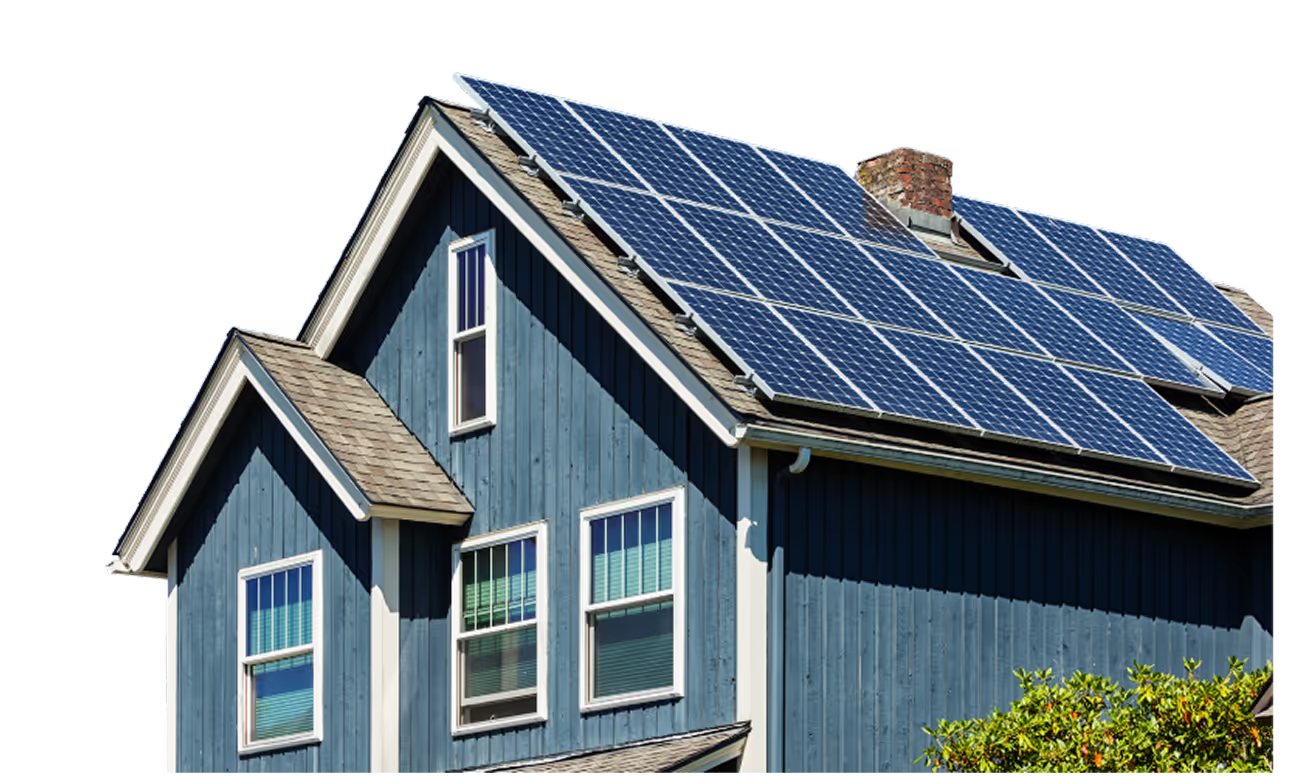
Key Takeaway:
A 25-year solar investment is only as good as the roof beneath it. By auditing your roof’s health, orientation, and shading today, you prevent costly structural repairs and ensure your system is perfectly right-sized for maximum ROI.
Malaysia receives 4.5 to 6 peak sun hours daily, making rooftop solar one of the most practical renewable energy options for homeowners. But before installing a system, one question needs answering first:
Is your roof suitable for solar panels?
Not every roof is ideal. Orientation, shading, age, structural integrity, material type, and available space all affect how well a system performs over its 25 years lifespan. If your roof is unsuitable, a solar installation can cause costly structural problems or simply underperform.
If you're wondering whether your roof is suitable for solar in Malaysia, this homeowner checklist will help you assess the key factors before speaking to an installer.
Solar Roof Suitability Checklist for Malaysian Homes
This guide covers the six key factors that determine whether your roof is ready:
- Orientation and tilt
- Shading
- Roof condition and age
- Structural integrity
- Roof material compatibility
- Available space
Work through each section below, then use the full checklist at the end to assess your home.
1. Roof Orientation and Tilt
.webp)
Because Malaysia straddles the equator, both north- and south-facing roofs perform well and produce similar annual energy output. East and west-facing roofs are also viable, but typically generate 10–20% less energy annually depending on shading conditions.
Flat roofs are actually ideal for solar, because panels can be mounted at the optimal tilt using ballasted racking systems, without drilling into the roof surface.
The optimal tilt angle for Peninsular Malaysia is between 10° to 15°. Roof pitches between 5° and 25° work well. Anything steeper than 35° warrants a conversation with your installer before proceeding.
2. Shading

Shading is one of the biggest performance factors in any solar installation. Panels in the same electrical string tend to operate together, meaning a shaded panel can reduce output across the whole system. Common shading sources include neighbouring buildings, trees, water tanks, satellite dishes, and air conditioning units.
However, modern technologies like microinverters and power optimisers can significantly reduce these losses by allowing each panel to operate independently. Shading is less of a dealbreaker than it once was, but it is not eliminated entirely. Even with optimisers, sustained heavy shading will still reduce your system's output and your return on investment.
Quick self-check: Visit your roof at noon on a clear day and observe which areas fall into shade and for how long. If significant shading affects more than 20% of your intended panel area for over 2 hours daily, raise this with your installer. They may recommend microinverters or power optimisers, adjust the panel layout, or advise on trimming nearby trees.
3. Roof Condition and Age

Solar panels are designed to last 25-30 years. If your roof has less than 15 years of useful life remaining, it is worth replacing the roof first. Removing and reinstalling solar panels to access the roof beneath can cost up to RM 15,000, which is money that could be better spent elsewhere.
Check for: cracked or missing tiles, rust on metal roofing, ceiling water stains, and any visible sagging. If you are unsure of your roof's remaining lifespan, a roofing contractor can assess it before you commit to a solar installation.
Once your system is up and running, keeping it in good shape matters just as much. For a guide on how to maintain your solar panels over the years, take a look at Solar Warranty Malaysia: What GetSolar's RTO Covers and Solar Performance Guarantee Malaysia: What Homeowners Get.
4. Roof Structural Integrity
Each solar panel adds approximately 15-25kg of load. A 5kWP system typically puts around 300-400 kg on your roof structure, roughly equivalent to a small car. Most modern homes handle this load without issue, but pre-1990’s homes with timber-framed roofing structures may need a professional assessment first.
Key things to flag with your installer: any prior roof modifications, repairs, or extensions; and the condition of waterproofing membranes on flat roofs.
If you have concerns about whether your roof can support the load, we cover this in more detail in our guide.
5. Roof Material Compatibility
Most Malaysian homes uses clay tile, metal decks, or concrete roofing, all of which are compatible with standard solar mounting systems. However, some materials require additional consideration:
Clay tiles: Installers typically use tile replacement brackets to mount panels securely without cracking the tiles. This adds some complexity but is a routine part of installation.
Metal roofs: Generally the easiest roofing type for solar installation. Standing seam metal roofs in particular are well-suited to clamp-based mounting systems that require no penetration of the roof surface.
Asbestos cement roofing: Still found in some older Malaysian terrace houses, this material requires professional assessment before any solar work proceeds. In many cases, the roof will need to be replaced before installation can begin. Do not attempt to work on asbestos roofing without proper guidance.
A qualified installer will assess your roof material during the site survey.
5. Available Roof Space
The amount of usable roof space determines what system size is achievable. Modern solar panels average 540-580W per panel, which means fewer panels are needed compared to system designed even five years ago.
As a general guide:
Before measuring, deduct the area taken up by water tanks, air conditioning units, satellite dishes, and any shaded zones. Your usable roof space is what remains. To get a sense of what a system of this size would cost, we have a breakdown of solar panel costs for homeowners in 2026.
A Note on Solar ATAP and Financial Returns
Malaysia's Solar ATAP (Solar Accelerated Transition Action Programme) replaced the earlier NEM scheme and allows residential solar owners to export excess energy back to the gird at a set export rate. This improves the financial case for rooftop solar, particularly for households that consume most of their electricity during daylight hours.
Right-sizing your system to your actual consumption, based on your TNB bills is one of the most important steps in making solar work financially. A system that is too large exports excess at a lower rate than you pay to import; a system that is too small leaves savings on the table.
Learn how Solar ATAP works and how it affects your savings.
Summary Checklist
If your roof meets most of the following criteria, you are likely a strong candidate for rooftop solar in Malaysia:
Malaysia's solar economics are compelling, but a good installation starts with an honest roof assessment. Use this checklist, ask your installer the right questions, and do not proceed until you have worked through each factor.
If your roof checks most of these boxes, you are likely a strong candidate for solar. And if you're still weighing up how to pay for your system, we compare all three main options in Solar Financing Malaysia: RTO vs Buying Outright vs Solar Loan.
The next step is understanding how much you could save based on your actual electricity usage. Get a personalised estimate using our Solar Savings Calculator or chat with us on WhatsApp for a quick assessment.

Rent-to-Own Solar. RM0 Upfront cost. Guaranteed Savings
Immediate ROI



Rent-to-Own Solar. RM0 Upfront cost. Guaranteed Savings
(10-Year RTO plan)
+ 10-Year Free Maintenance

Be part of The Solar Collective, where we share the latest updates, tips, and discussions on solar energy.

%20vs%20Assessment%20Tax%20(Cukai%20Pintu)%20Key%20Differences.webp)