Key Takeaways:
A solar battery adds RM12,000–RM30,000 to your system cost and typically extends payback by two to four years. Under Solar ATAP, batteries earn their keep when you have heavy night-time usage, regular outages, or consistently large daytime exports. For most daytime-heavy landed homes, panels alone still deliver the strongest ROI.
A homeowner in Subang Jaya was recently quoted RM45,000 for solar panels, and RM20,000 on top of that for a battery. She walked away from solar entirely. The installer had bundled both without explaining why, and the number felt too big to trust.
That's a common outcome when batteries get pushed by default. A solar battery adds RM12,000–RM30,000 to your overall system cost. For some Malaysian homes, it's the right call. For others, it stretches your payback period by three years with marginal benefit.
This guide gives you the actual cost breakdown for landed homes, including how Solar ATAP's monthly credit expiry has changed the calculation for higher-consumption households.
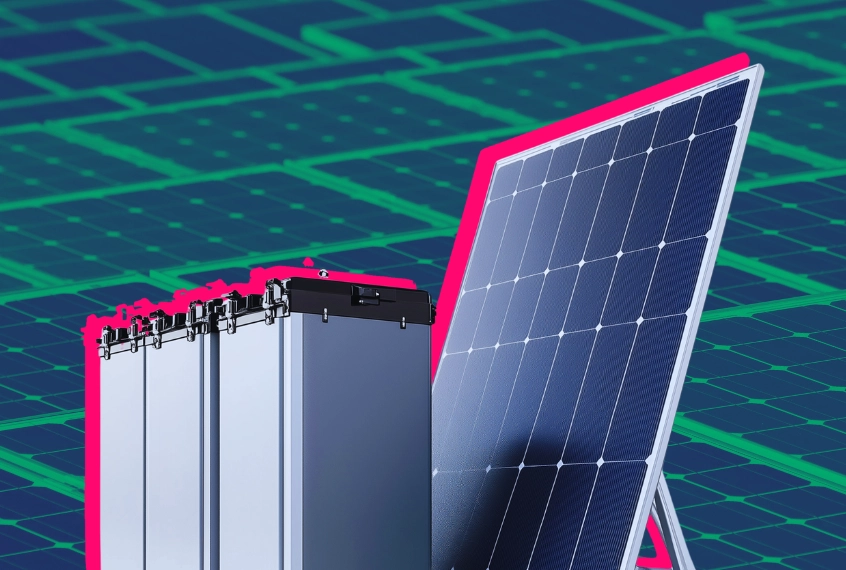
What a Solar Battery Actually Does
A solar battery stores excess daytime solar generation for use at night or during outages. It sits between your solar panels and your switchboard, charging when the sun is up and discharging when it's not.
A residential battery setup has three components: the battery itself, a hybrid inverter that manages the flow between panels, battery, and grid, and an energy management system that decides when to store and when to discharge.
Capacities for residential use sit at 5 kWh, 10 kWh, or 15 kWh. Most residential batteries today use LiFePO4 chemistry (lithium iron phosphate, the safest and most durable option for home use), rated for 6,000+ charge cycles, which translates to a 10-15 year warranty range.
How Much Does a Solar Battery Cost in Malaysia in 2026?
Here's what real residential battery add-ons cost in Malaysia today, on top of a new solar installation:
The hybrid inverter is non-optional for a battery setup and runs RM3,000–RM6,000 more than a standard string inverter.
How Solar Batteries Benefit You Under Solar ATAP
Under NEM 3.0 (Net Energy Metering, the previous solar export scheme), exported solar was credited near 1-to-1 against your TNB bill. The grid effectively functioned as a free battery. Adding a physical battery rarely made financial sense for residential homes.
Solar ATAP changed that, and the April 2026 AFA rebate cut where AFA (Automatic Fuel Adjustment) is the monthly tariff component that adjusts your bill based on fuel costs, made the gap even harder to ignore. Now there's a price gap:
- Import rate (high tier): ~RM0.49/kWh for usage above 1,500 kWh/month
- Export rate (high tier): ~RM0.37/kWh
- The gap: RM0.12/kWh that you lose every time you export at day and re-import at night
A battery captures that gap. Instead of selling daytime excess at RM0.37/kWh and buying it back at RM0.49/kWh, you store it and use it directly.
Note: This gap is only valuable if you're consistently exporting energy that would otherwise expire. Solar ATAP credits expire at the end of each billing month.
When a Battery Makes Sense for Your Home
A battery earns its keep when at least one of these is true:
- Heavy night-time usage. More than 60% of your consumption falls between 7pm and 8am.
- Existing solar regularly over-exports. Your system was sized for export under NEM, daytime occupancy is low, and you consistently push surplus to the grid that now expires monthly.
- Frequent area outages. A battery doubles as a UPS (uninterruptible power supply, backup power that kicks in immediately during a blackout), which has practical value beyond the financial return.
- Pairing with TNB Time-of-Use tariff. Time-of-Use pricing charges different rates at different hours of the day. A battery lets you arbitrage the gap between off-peak (4–10 sen/kWh) and peak rates.
- Households with EVs charging at night. A battery can shift solar generation from midday to overnight charging, effectively making EV charging free.
When a Battery Doesn't Make Sense
- Daytime-heavy households. If you work from home or run, daytime AC, your existing solar already covers most usage at the point of generation, a battery has nothing to capture.
- Homes with bills under RM300/month. Absolute savings are too small to justify the added RM12,000–RM30,000 in capital.
- Homeowners targeting fast payback. A battery typically extends payback by two to four years. If speed of return is your primary criterion, skip the battery for now.
The Real Payback: Battery vs No Battery
Here's a worked example: an 8 kWp solar system on a Klang Valley landed home with a RM 350/month TNB bill, daytime-heavy usage, Retail Pricing Category (RP4) tariffs.
The battery delivers more total savings over 25 years, but the extra RM18,000 in cumulative return came at the cost of three additional years of payback and RM20,000 more in upfront capital. For a daytime-heavy household like this one, panels alone make the stronger financial case.
What to Look For If You Decide to Add One
If the numbers works for your home, here's the short checklist:
- Chemistry matters. Stick with LiFePO4. Avoid lead-acid (short lifespan) and NMC (thermal safety concerns for residential use).
- Get a reputable hybrid inverter. Huawei, Sungrow, Solis, and Fronius dominate the Malaysian market for a reason.
- Check the warranty. A 10-year minimum on the battery itself with 6,000+ cycle rating is the baseline.
- Size to your night-time load, not to maximise spec. An over-sized battery ties up capital you won't see returns from.
Most Homes Don't Need a Battery. The Ones That Do Should Pay for the Right Reasons.
For most Malaysian landed homeowners under Solar ATAP, panels alone deliver a solid ROI. A battery is the right call when night usage is heavy, your area has frequent outages, or you want energy independence, but not because it was bundled into a quote.
If you've already been quoted combine system, ask your installer to break out the panels-only cost from the battery cost separately, then run the numbers against your usage profile.
Ready to see your numbers? Use our free Solar Savings Calculator or chat with our solar advisors for a no-obligation assessment.

Rent-to-Own Solar. RM0 Upfront cost. Guaranteed Savings
Immediate ROI



Rent-to-Own Solar. RM0 Upfront cost. Guaranteed Savings
(10-Year RTO plan)
+ 10-Year Free Maintenance

Be part of The Solar Collective, where we share the latest updates, tips, and discussions on solar energy.


%20Price%20per%20Sq%20Ft.webp)
%20vs%20Assessment%20Tax%20(Cukai%20Pintu)%20Key%20Differences.webp)