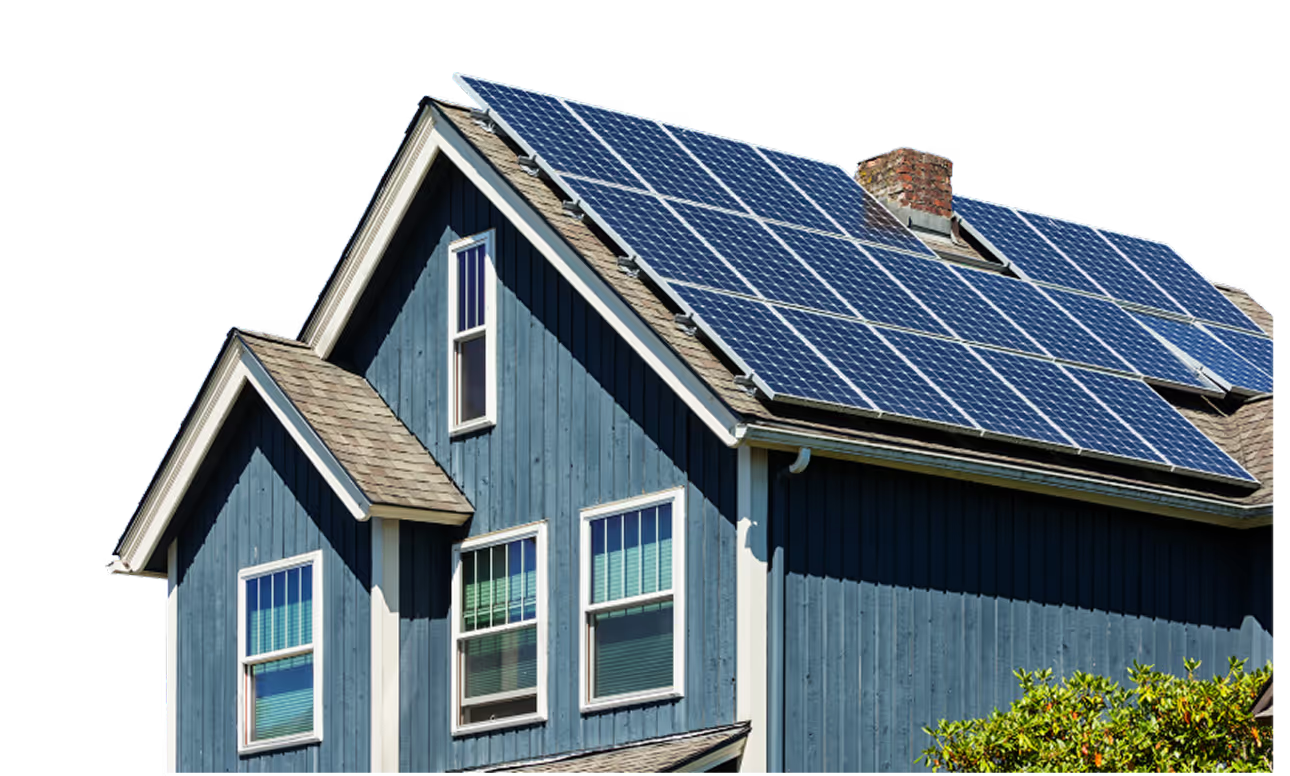
Thinking of selling your home in Singapore but not sure what happens to the solar panels you installed? As solar adoption among landed homeowners grows, this question is coming up more often and the stakes are higher than most sellers realise. A well-handled solar transfer can be a genuine selling point. A poorly managed one can delay or complicate your sale.
The answer depends entirely on how you financed your system and a range of other factors. Here's what you need to know.
Who Can Even Own Solar Panels in Singapore?
In Singapore, solar panels on private residences are predominantly a landed property feature. HDB flat owners cannot install their own panels.
Condo and penthouse owners may install solar with MCST approval, but face restrictions on exporting excess electricity to the grid. If you're exploring this route, our guide for MCSTs on whether condominiums can go solar covers everything you need to know.
If you own a landed property (terrace, semi-D, bungalow) you can install solar freely and connect to the grid under the Energy Market Authority's (EMA) net metering framework. For a broader overview of how solar works in Singapore, our complete guide to solar energy in Singapore is a good place to start.
Do Solar Panels Affect Your Property's Sale Price?
Yes, positively. Research suggests solar panels can increase a landed home's value by approximately 3% to 4%. This is consistent with a BCA-commissioned report showing Singaporean buyers are willing to pay a premium for green homes, and a PropertyGuru survey finding 62% of Singaporeans are open to purchasing a net-zero home.
For a $3 million landed property, a 3–4% premium translates to $90,000–$120,000 in potential added value, often far exceeding the cost of the system itself.
What Can You Do With Your Solar System?
Option 1: Leave the Panels and Include Them in the Sale
Installed solar panels are generally treated as fixtures attached to the property and transfer with the home when you sell.
What you should do:
- Include the solar system in your Option to Purchase (OTP) and Sale & Purchase Agreement
- Provide the buyer with all documentation: installation contract, inverter/panel warranties, SP Group interconnection approval, and past energy generation data
- Notify your solar installer so they can update account ownership with the new homeowner
- If you are on a net metering arrangement with SP Group, inform SP Group of the ownership change
Option 2: Remove the Panels and Take Them With You
You can remove your panels before the sale, but it's rarely worth it, for several reasons:
- Removal risks roof damage, which you'll be liable to repair
- A solar system is designed for a specific roof size, orientation, and household load profile. Reinstalling it on a new property usually requires a full system redesign
- You lose a valuable selling point, potentially reducing your asking price
- The removal must be completed before electrical inspections tied to the property transfer
Note: If you proceed with this option, clearly state in the Sale & Purchase Agreement that the solar system is not included in the sale.
If You Have an Outstanding Loan or Lease
How your system was financed determines what must happen before or during the sale. This is separate from the leave-or-take decision above, it applies regardless of which option you choose.
Secured loan (tied to the property): The loan must be fully paid off before ownership can be transferred. Your solicitor will need to account for this in the completion process.
Unsecured personal loan: The loan is not tied to the property, so you can proceed with the sale. However, you remain responsible for repaying any outstanding balance.
Rent-to-Own / leasing schemes: For owners on Rent-to-Own schemes where the solar company retains ownership of the system until the rental term ends, contact your solar provider early as the lease may need to be transferred to the new owner or bought out before the sale can proceed. It's also worth noting that Power Purchase Agreements (PPAs) are not applicable for residential homes in Singapore, so Rent-to-Own remains the primary zero-upfront route for homeowners.
What Documents Should You Prepare?
To facilitate a smooth handover, gather the following before listing your property:
- Installation contract from your solar company
- Warranty documents confirm with your installer whether warranties are transferable and whether a transfer fee applies
- SP Group interconnection approval (the licence allowing you to connect to the grid)
- Past energy generation and export data
- Any outstanding loan or lease agreements related to the system
Most panel and inverter manufacturer warranties are transferable to the new owner, making them an attractive part of your listing. Some providers charge a transfer fee or require formal notification, contact your installer to confirm the process before you list. For a full breakdown of what's typically covered, our solar panel warranty guide for Singapore homeowners covers the specifics in detail.
What Buyers Should Know
If you're purchasing a landed property with solar panels already installed:
- Ask for all documentation listed above
- Check whether the panels are owned outright or under a lease or loan arrangement
- Commission a solar system inspection to verify performance and identify any issues before you complete the purchase
- Update the SP Group and installer accounts to reflect your new ownership once the property is transferred
It is also worth checking the age of the inverter. Solar panels typically carry a 25-year performance warranty, but inverters usually have a shorter warranty of 10–12 years. An ageing inverter is, a legitimate negotiating point, and sellers who share their maintenance history upfront tend to move through the process faster. Wondering what happens to the panels themselves over the long term?
Our article on what happens to solar panels after 25 years is a useful reference for both sellers and buyers evaluating an older system.
Your Solar Panels Are an Asset
Selling a landed home in Singapore with solar panels is straightforward if you own your system outright. The panels transfer with the property, warranties generally follow, and you gain a compelling selling point.
If you're on a loan or lease, some extra steps are needed, but nothing that a good conveyancing lawyer and your solar provider can't help you navigate.
The key is preparation: know your ownership status, gather your documentation, and communicate clearly with buyers. Done right, your solar investment doesn't just save you money while you live there, it works in your favour when it's time to sell.
Planning to go solar before selling, or want to understand your system's current value? Use our FREE solar calculator to get a quick estimate or speak with a solar advisor for further details.

Rent-to-Own Solar for Business with Guaranteed Performance
Immediate ROI



Rent-to-Own Solar. $0 Upfront cost. Guaranteed Savings
(10-Year RTO plan)
+ 10-Year Free Maintenance

Be part of The Solar Collective, where we share the latest updates, tips, and discussions on solar energy.

.png)